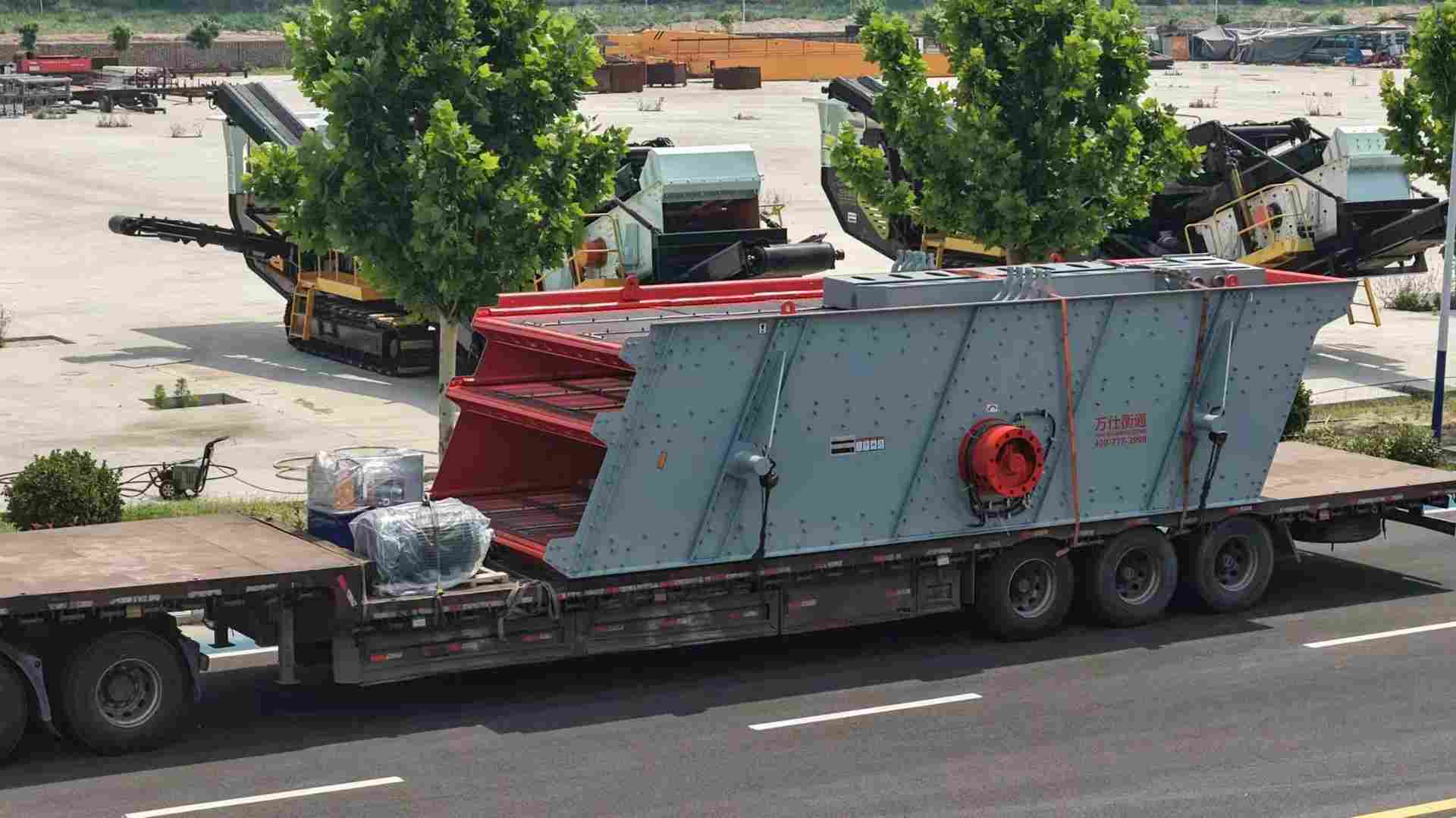
The Role of Vibrating Screens in Mineral Processing
Vibrating screens are the workhorses of size classification in mining, aggregate and recycling operations. They separate material into different size fractions for further processing or product sales. Choosing the right screen — with correct size, type and configuration — directly impacts plant throughput, product quality and operating costs.
Key Screen Selection Parameters
1. Capacity Requirements
Screen capacity is expressed in tons per hour per square meter of screen area (t/h/m²). The required screen area is calculated by dividing your target throughput by the unit capacity. Oversizing the screen ensures reliable performance during peak loads and feed fluctuations.
2. Feed Material Characteristics
Consider: particle size distribution, bulk density, moisture content, particle shape, and material abrasiveness. High moisture content (>5%) or clay contamination can cause blinding and requires careful screen media selection.
3. Separation Size (Cut Point)
The separation size determines the screen aperture. For efficient screening, the target size should be at least 2.5-3x the feed's characteristic size. Multi-deck screens produce multiple products simultaneously — common configurations include 2-deck, 3-deck and 4-deck screens.
4. Screening Efficiency Target
Industrial screens typically achieve 85-95% screening efficiency. Higher efficiency requires more screen area, slower material velocity and appropriate screen media. For final product screens where specification compliance is critical, select screens with generous sizing margin.
Screen Types Compared
Circular-Motion Screens (Elliptical Throw)
The most common screen type for general sizing duties. Circular motion is produced by two counter-rotating eccentric weights. Advantages: reliable design, good screening efficiency, suitable for most materials and feed conditions. Best for: scalping, rough sizing and medium-capacity classification.
Linear-Motion Screens (Horizontal Throw)
Linear motion is produced by double-shaft exciters or linear vibratory drives. The horizontal throw angle (typically 30-45°) allows for good stratification and effective drainage. Advantages: excellent for dewatering, high capacity per unit width, good for sticky materials. Best for: dewatering, trash removal, high-capacity sizing.
Banana Screens (Multi-Slope)
Feature a curved deck with 3-5 slopes — steep at the feed end (30-35°), flattening toward the discharge (10-15°). The acceleration profile along the deck creates excellent material stratification and high throughput. Advantages: 2-3x the capacity of conventional screens, superior efficiency for fine cuts. Best for: high-capacity classification, fine screening (below 10mm), feed preparation for wash plants.
Screen Deck Configuration
Number of Decks:
- Single deck: one product size (oversize + undersize)
- Double deck: three products (two oversize fractions + undersize)
- Triple deck: four products (three oversize fractions + undersize)
- Quad deck: five products — used in high-capacity washing plants
Deck Position:
- Top deck: coarsest separation, takes highest load
- Middle deck(s): intermediate sizes
- Bottom deck: finest separation, most vulnerable to blinding
Screen Media Options
Woven Wire Mesh: Most common media type. Available in square, slotted and harp (crimped) configurations. Square mesh provides highest open area; slotted for precise size control; harp for high strength and anti-blinding.
Rubber Panels: Excellent wear resistance for abrasive materials. Can be molded into complex shapes. Common on the feed deck and high-wear areas.
Polyurethane Screens: Good wear resistance and non-blinding properties. Lighter weight reduces structural stress. Ideal for fine screening (below 30mm) and dewatering applications.
Punch Plate: Heavy-duty media for scalping and handling large feed lumps. High open area configurations available for medium-size separation.
WSHT Triple-Deck Vibrating Screen — High-Capacity Classification
Calculating Required Screen Area
The basic formula for screen area:
A = Q / (q × C)
Where: A = required screen area (m²)
Q = feed rate (t/h)
q = unit capacity (t/h/m²) based on material and separation size
C = correction factor for efficiency, moisture, etc.
WSHT provides free screen sizing calculations as part of our equipment selection service. Share your feed sample data and capacity requirements and our applications team will specify the optimal screen configuration.